


Manuka Blossom
In 25 years, Manuka honey has grown from anonymity to world-wide notoriety—and because it has raised awareness of the healthful properties of honey—it has become a darling of the honey health industry. Its rise in popularity is the result of scientifically authenticated anti-bacterial properties. Yet for those who like a richly flavored honey, this honey is equally at home on the table. The fact that this is a native plant combined with the “clean and green” policies in New Zealand also make it possible to obtain plausibly organic versions of this honey.
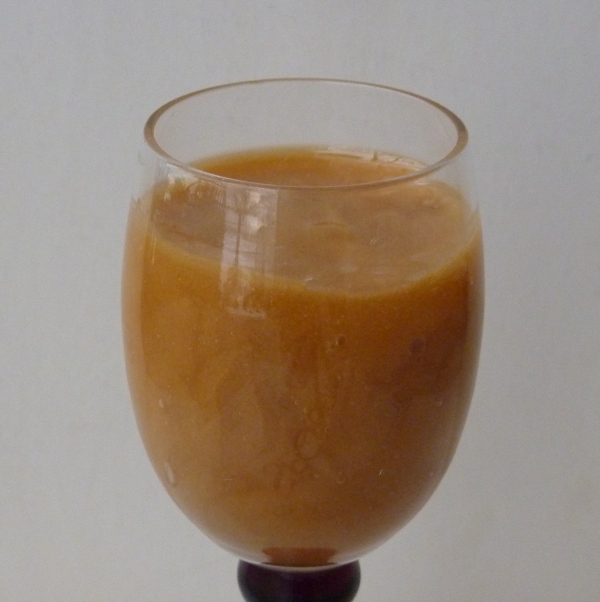
Manuka Honey
Manuka honey is a distinctively flavored honey with thixotropic properties. This means that it is gel-like in liquid form, and becomes less solid when stirred or shaken. It is slow to granulate and forms coarse crystals, for this reason it is often creamed. Its color is dark cream to tan or dark brown. It is aromatic with damp earth and heather notes and a cool menthol (or eucalyptus) taste and rich flavor of mineral, barley sugar and herbs. It is medium sweet with a slightly bitter aftertaste. In its creamed form, the honey has a cool, smooth feel in the mouth. It is particularly good as comb honey.
Manuka honey is primarily obtained in New Zealand from the Manuka or Tea Tree, Leptospermum scoparium and also from the Kunzea ericoides (Kānuka, White tea-tree or Burgan and classified as Leptospermum ericoides prior to 1983). Although these two plants are distinguishable by the smoothness of their foliage, the honey produced by each is virtually indistinguishable by pollen, taste and aroma. The honey from both is called Manuka honey. These species likely originated in Australia/ Tasmania, where there are dozens of Leptospermum species known collectively as Tea Tree or Jellybush. The name Tea Tree arose from the custom of making tea from the leaves, purportedly coined by Captain Cook. In Australia, this honey is known as Tea Tree honey or Jellybush honey or even Leptospermum honey, and share many of the same characteristics as New Zealand’s Manuka honey (recently a honey with the same properties as Manuka has been found to be produced from Leptospermum polygalifolium, from Australia).
Although there is an oil derived from Manuka, the popular Tea Tree Oil is not produced from the Leptospermum species of plants. Tea tree oil is produced from the Australian group of trees of the Melaleuca genus, named similarly as another source of tea. It is from Melaleuca plants that the well known tea tree oil is produced.
Despite the current popularity of its honey, Manuka was considered an invasive weed in New Zealand and was targeted for eradication in the 1950’s. Manuka honey was considered low quality and beekeepers tried to avoid collecting it because its jelly-like consistency made it hard to extract from the hive. It is now recognized not only as ecologically important, but also as a natural resource of economical, ornamental and medicinal value. In New Zealand, north islanders knew of the healing properties of Manuka honey. It was used on wounds and to settle upset stomachs and intestinal complaints. But it wasn’t until Dr. Peter Molan, MBE, of Waikato University’s Honey Research Unit, proved the special antibacterial properties of Manuka that the stage was set for official world-wide recognition.
All honey is antibacterial to some degree and has been used to treat wounds for thousands of years. This is mainly the result of a chemical process within honey that produces hydrogen peroxide, a well known antibacterial and cleansing agent. The key difference with Manuka is antibacterial properties not related to hydrogen peroxide (known as NPA or Non Peroxide Activity). What Molan discovered was an additional, unidentified anti-microbial factor that he called UMF® or Unique Manuka Factor. He found that the strength of the property was not consistent across different types of honeys nor in fact, from different sources of the same type of honey (this was later determined to be due to both the dilution of manuka honey by other honey types and the variety of L. scoparium harvested). He then developed a test to determine the degree of UMF® strength or activity. This was measured and given a UMF® activity value. Typical activity values are 10+ to 40+. The higher the activity, the higher price it commands. In a brilliant marketing move, Manuka honey producers in New Zealand decided to protect the value of their unique honey from unsubstantiated claims of other honey producers and formed the Active Manuka Honey Association – AMHA (renamed Unique Manuka Factor® Honey Association – UMFHA in July 2011) with sole use of the UMF® title. Only honey producers that are members of the AMHA may use the UMF®; title and the AMHA actively protects their trademark. Honey testing facilities at the University of Waikato Honey Research Unit are open to anyone, but results will be given as levels of hydrogen peroxide and non-hydrogen peroxide activity and no UMF® value.
The unidentified factor? It has been discovered to be MGO, or methylglyoxal, a compound found in all honey and other foods such as wine, coffee and chocolate, but in much lower levels. And indeed, some honeys are now rated by the amount of MGO contained. However, this is not considered a true measure of the antibacterial activity of the honey. Apparently there is an unidentified synergistic component in honey that affects the efficacy of MGO.
As more has been learned about the source of the antibacterial properties of honey, new measurements have been created to rate these properties in honey. Questions about the reliability of the UMF® rating, and research showing that MGO levels do not relate directly to increased antibacterial activity, have led to new methods of measuring the activity of honey. Dr. Peter Molan himself has released his own testing method called The Molan Gold Standard which is backed by the University of Waikato. This rating is available to any honey producer.
Determining actual bio-activity levels of honey is challenging. Producers are using a wide variety of measures to rate their honey. Along with UMF® and the Molan Gold Standard, here are a few more.
-AAH (Antibacterial, Antioxidant Honey)
-MGO, which measures the amount of MGO
-Active and activity
-AHH+
-Bio-active and bio-activity
-NPA (Non Peroxide Activity)
-any prominent number between 1 and 50, with or without the symbol +.
To help reduce confusion and maintain confidence in their honey products worldwide, the government of New Zealand is supporting the creation of an enforceable standard for bio-activity in honey through The Bee Products Standards Council
Just how important is the activity rating? Undoubtedly quite important when applied topically for skin conditions, wounds and internally for fighting harmful gut bacteria, but the importance of these ratings is minimal when buying honey for eating. There are many healthful reasons for eating most kinds of honey and the most important consideration in my opinion, is minimal processing and additive-free to retain the beneficial properties of the honey.
AKA: Red Tea Tree, Māori: ‘mānuka’,
Latin Name: Leptospermum scoparium and Leptospermum polygalifolium (recently discovered to have similar properties as L. scoparium)
Honey Origins: New Zealand and Australia
Image Credit (Manuka Blossom): 
 Some rights reserved by Nicki-G
—————————————————————————-
Further reading
Peter Molan’s Research and Papers
AMHA – UMFHA Official Website
The Molan Gold Standard
Mānuka/kāhikatoa & kānuka
Effect of Manuka Honey on Enterobacteria
Ongoing research papers concerning antibacterial properties of honey
Can you buy Manuka Honey directly from New Zealand?
Hi Cynthia:
Absolutely! For instance, I have purchased honey directly from http://www.nzartisanhoney.co.nz, and others. The shipping was quick and economical. If you are interested in the Unique Manuka Factor®, then here is a list of honey farms licensed by the UMFHA. Many sell online.
…Scott
thank you for all the wonderful information.
My pleasure Michelle.
You do realise that the Australian Berringa honeys have more MGO than manuka honey and higher antibacterial potency? Manuka honey is not the best choice for anti-inflammatory or anti-oxidant applications either. Rewarewa honey is superior to manuka honey for those applications.
What is the difference between manuka honey
and one that have UMF
Hi Alamelu:
UMF, or “Unique Manuka Factor” is simply the name given to the property of Manuka honey that fights bacteria. This property likely exists in other honeys, but since it is a trademarked name, you won’t likely see it applied to any honey but Manuka from New Zealand.
HT,
Thank you for a great site, and your hard work creating & maintaining it!
Could you please indicate approximate shipping charges for the NZ artisan honeys, and any other regulations for import into the US [APHIS etc.]. I went to the site but no such information was available.
Anything else one should be aware of when importing honey?
Thank you.
Hi:
Thanks! It is a lot of fun.
I have never had any problem buying honey from New Zealand or Europe. As I understand it, it is hard to import honey into New Zealand as they try to prevent diseases that may harm their own bee population.
Shipping is relatively inexpensive when you consider where it is coming from. I figure that if you are paying less for shipping than the price of the honey, you are doing well. Check out J. Freindly (https://nzartisanhoney.co.nz). I have purchased honey there before and you can use their checkout to see the shipping charges. It is around $12 shipping for one jar and $50 for 10 jars of honey.
I have always been pleasantly surprised at how quickly it gets here (Illinois). There have never been any customs or import problems for me (knock on wood).
…Scott
Hi Scott, Great site and service! Thanks and well done!
The University of Waikato’s Honey Research Unit website is no longer active. You can find the relevant information at:
https://waikato.academia.edu/PeterMolan/Papers
Thanks! Site updated.
Your manuka honey is an amazing healer for sores and ulcers that are part of herpes outbreaks
A poultice of manuka honey under a cotton pledget and covered with white papaer towel in 24 hours has these awful sores well on the way to being healed
Manuka honey also makes a wonderful drink when added to pepermint teathes two seem to have a calming rest giving effect on frazzled nerves when one is overstressed
Hi,
This is a fantastic site Scott. Thank you for creating it.
think this will prove interesting reading. “HONEY SOURCED FROM AN AUSTRALIAN native myrtle tree has been found to have the most powerful anti-bacterial properties of any honey in the world and could be used to treat antibiotic-resistant bacterial infections that commonly occur in hospitals and nursing homes.
A Brisbane-based research group found that Australian native myrtle honey has very high levels of the anti-bacterial compound, Methylglyoxal (MGO), and outperforms all medicinal honeys currently available on the market, including Manuka honeys”
A competitor for Manuka Honey… I found it on line on this site: https://www.qaafi.uq.edu.au/australian-honey-proves-to-be-a-powerful-anti-bacterial-treatment
The Australian government wouldn’t tell porkies just to get ahead in the honey game.. Would they? I am a Manuka honey buyer however if this is true & why shouldn’t it be..I will be switching to myrtle tree honey.
Hi Scott,
Just wondering if you may know the answer to my question… I live in Western Australia where no honey can be imported from any other state in Australia or from overseas due to disease risk. I am wondering if there is any honey in WA with high MGO levels? I have searched some databases (Proquest,Pubmed) but can’t find any info. Some of the Jarrah honey’s sold in WA have a TA rating of 30+, (such as Elixer honey for example) however, this is probably mainly due to the Hydrogen Peroxide Activity and not the MGO level. From what I have read, I high MGO is pretty important in terms of antibacterial properties. Is there any way for people in WA to find or get medical grade honey!!? I have H.Pylori and want to devise an effective non-pharmaceutical treatment plan asap.
Hi Talia:
I didn’t know things were so strict in WA! As you probably know, you can get quite a high UMF honey made from Leptospermum polygalifolium (Tantoon or Yellow Tea Tree), but it only grows in the extreme east of Australia.
(later note: This shows some success with Jarrah treating Pylori https://www.beesneez.com.au/types-of-honey.html)
Unfortunately, it doesn’t look good for your experimental treatment. Western Australia honey doesn’t seem to have much in the way of high MGO levels. However, this map show two sources in Western Australia from Orchard? and Coastal Moort. https://www.ncbi.nlm.nih.gov/pmc/articles/PMC3065476/figure/pone-0018229-g001/ (from the report below).
The principal honey plants in Western Australia are:
**highest antibacterial activity – but mainly peroxide.
Reference Material:
The Antibacterial Activity of Honey Derived from Australian Flora:
https://www.ncbi.nlm.nih.gov/pmc/articles/PMC3065476/#pone.0018229.s001
(PLoS One. 2011; 6(3): e18229.
Published online 2011 March 28. doi: 10.1371/journal.pone.0018229
PMCID: PMC3065476)
Table 1: Here is the table showing antibacterial activity of honey samples of Australia:
https://www.ncbi.nlm.nih.gov/pmc/articles/PMC3065476/table/pone-0018229-t001/
Table 2 Here is the table showing non-peroxide antibacterial activity of honey samples of Australia:
https://www.ncbi.nlm.nih.gov/pmc/articles/PMC3065476/table/pone-0018229-t002/
…scott
I have used Manuka Honey to heal my grandson’s eyes after weeks of utterly useless and tramatic eyecream(thanks GP ) achieved nothing. Manuka honey/warm boiled water 50/50 on a clean cloth placed on his eyes within three days his persistant eye sores vanished forever. Also saw Manuka Honey heal a sty on each eye of my son in a day and a half, gone. Cleared up my granddaughters’s eczema on her arms too, didn’t even bother to go to the Dr.’s (we reduced milk intake and chemical contact too of course) but the honey just turns things around from the moment it touches. It is used in hospitals in Germany especially to treat burns victims. It is great in tea, and on porridge and is SUPER GOOD FOR YOU. I buy for £3.99 Aldi Manuka Honey +10. I contacted the buying dept. of Aldi to check the source, it works for me… It is great for the complection too! Eat it, drink it, smear it, bathe in it…
Go bees!
(I was Googling a way to buy direct from beekeepers which is how I found your site- thanks for the contact info. Brilliant help.)
Hi Carrie:
I am glad it worked so well! The ability to keep the wound moist (perfect for eyes and burns) and the antibacterial power helping the body do it’s job is quite a combination.
…Scott
Hi Scott, I’m a fan of honey and been buying them for years but just this week I bought a jar of UMF 20+. Then I read today that the UMF can be tweeked by heat?? And that the price I pay for this UMF 20+ honey could be cheap honey with the UMF license. Anything is possible this day yes??
Here is the website I found https://www.greenbayharvest.com/pages/Manuka+Honey
Scott – can you help me with these ratings for Manuka Honey please? I also have the Aldi Manuka Honey + 10 and it is delicious – but how can it be the same standard as other UMF registered honey which cost considerably more. I have read everything I can about the honey – including your info and they all say the same thing – that not all Manuka honey has the same antibacterial power. I have also read that you need to buy only UMF Manuka honey for it to be of any real health benefit to you. I am looking for help with digestive problems so its really important to me that the honey I buy wont be useless when it is digested – destroyed by the heat in the stomach. So can my cheap Aldi honey really help – I doubt it somehow.
This amazing posting, “Manuka Honey
Great discussion Scott as I am about to embark on a small beekeeping enterprise!
Is genuine Manuka Honey pasturised and homogenised? I only eat “Raw” honey as it is unpasturised & unhomogenised as my belief was that these applications took most of the goodness out of honey?
Hi Paul:
That is a good question. I have read that moderate heating of Manuka honey does not negatively affect its unique healing properties, although of course it will affect the intrinsic healthful properties of honey. I will investigate and let you know what I find.
Update: Robin, knowledgeable in the Manuka industry responds, “UMF®/NPA activity is heat stable, whereas other substances (common to all honeys) in the honey will be affected.”
…Scott
hi Scott,
I have been using manuka honey for the past year with amazing results. Recently read about how it is packaged differently for using as a topical skin application and the difference is the honey being gamma irradiated to kill off any dangerous spores. My question is: is this process even necessary and were the tests done by Dr. Nolan and others using RAW manuka honey or this gamma irradiated version? Thanks in advance.
Regards,
Justin
Forgot to add. If anyone else knows besides Scott I would appreciate the help as well. Thanks.
Regards,
Justin
Maura, to answer your question regarding Aldi’s Manuka Honey, I see it states “Active 10+”. All honeys are active (peroxide activity) but what you want is the non-peroxide activity (NPA or UMF) which only some Manuka honey have. The Aldi one could be active 10 = Peroxide 10 + Non-peroxide 0. That’s what you need to ask them.
Hi Mimi:
Here is an interesting answer from Robin who has knowledge of the Manuka honey industry:
A: UMF® follows a growth cycle; it increases up to a point and then decreases. The honey’s speed along the curve can be accelerated by heating. We don’t think this will cause it to rise to a higher number than it would naturally with sufficient time. Good news for consumers is reasonably fresh Manuka honey that has not been unduly heated will exceed the UMF® level stated on pack and continue to increase its antibacterial activity for a good period of time.
In theory anything is possible, but there are enforced strict standards for honeys using the UMF® standard and trademark. In-market independent testing by regulatory and media organisations in major markets around the world over the past three years have shown 100% compliance with the UMF® standard. However a high proportion of honeys claiming to be “Manuka” but not displaying the UMF® mark have been found to contain far less activity than they state and cause a slur on Manuka Honey as a whole (don’t throw the baby out with the bath water!). Consumers should be careful when choosing between Manuka honey products and buy trusted brands displaying the UMF® mark.
…Scott
Hi Maura:
Maura, please see Robin’s previous reply to Mimi on this page. Since the Aldi Manuka Honey is not complying with the UMF® standard and has not defined what it’s 10+ means, and since the price is cheap, your doubts are well founded.
…Scott
Hi Carol:
Here is a response from Robin who is involved in the Manuka industry.
A: I agree with you Carol, and add Hydrogen Peroxide activity decreases rapidly over time as the glucose oxidase diminishes. A recent Australian study* shows the HP activity of many honey types decreased by an average 50% between months 18 and 36 of the honey’s age. The point is that any HP honey displaying an activity number is very likely to contain less activity than stated if tested six months or more after packing.
* Irish J, Blair S, Carter DA (2011) The Antibacterial Activity of Honey Derived from Australian Flora. PLoS ONE 6(3): e18229. doi:10.1371/journal.pone.0018229
…Scott
Hi Justin:
Robin, who has knowledge of the Manuka industry responds;
A: Although honey has been recorded as being used to treat infected wounds and cuts for thousands of years, and despite honey being proven to resist and kill bacteria, medical honey is gamma irradiated due to medical authorities insistence to remove the remotest possibility of anything untoward being introduced to the wound. Professor Molan started by using raw Manuka honey and changed to irradiated honey treatments when they became available.
…Scott
hi Scott,
Thanks for the response to my question. It was very helpful.
This is a really helpful article! I’m really interested in buying some good quality Manuka honey that doesn’t cost the earth. Do you have any suggestions of where or what brand I should purchase? I am sugar intolerant and this is about the only thing (non-manufactured like sweeteners) I can have in moderation. There is such a flood of Manuka honey onto the market that choosing quality/price is very difficult.
Thank you, Amy
Hi Scott
I’ll b visiting South Island NZ soon.i’ll be taking the opportunity to stock up my manuka honey. 🙂
Would u have any idea where is the best place to buy the manuka honey? We’ll also be going to Dunedin, Te Anau, Cromwell. Are there any place where I could buy honey along the way ?
Thanks.
As far as I was aware , hydrogen peroxide is beneficial to cells in its own right. In a sense clearing them of build up and oxygenating. So surely having peroxide in the manuka honey is aiding its benefical qualities as regards health? Or am I just getting it all wrong?
Cutting to the chase here–Can you name a genuine authentic raw (that means unheated, unprocessed, with all the pollens intact) manuka honey??? Or point us to any source of raw manuka honey?
My search has been quite frustrating. Turns out they are all heated and highly processed yet continue to market their products as “raw” “active” “UMF” “MGO” Different labels, but the actual honey are all undergoing the same processes.
All I want is a raw manuka honey (a genuine one, that is). Is it really impossible to just put manuka honey straight from the hive into a jar? I can get this all over upstate NY from local farms and neighbors. Its not manuka, of course. But it is raw, straight from the hive.
Thanks,
Janel
Bea Joy,
Congratulations on your trip to NZ. You’ve chosen the time when the weather is most stable, the water is warmest, and many fruits are being harvested.
Re. where to buy honey in the places you’ve mentioned. The biggest seller is Jones Fruit Stall, which is located on the highway on the southern side of Cromwell on the way to Queenstown. In addition to all the fresh and dried fruits, Mrs Jones sells a lot of honeys. https://www.mrsjonesorchard.co.nz/
Australian yellow box honey , is as good as any other honey, aprist Ron Heferen Central West Australia
Can anyone tell me if all manuka honey is RAW?
Or is it pasteurised?
I would not spend the money if it is pasteurised. Above all I want to use RAW honey. Any suggestions as where to buy some in England?
Thanks.
Sophie
Hi Sophie:
That is a good question. All Manuka honey is not RAW. This may sound contradictory, since Manuka honey is known for its healthful properties. But the unique healing factor of Manuka honey, known as the UMF is actually unaffected by the heat and heating time used to pasteurize honey. If the Manuka honey is being sold primarily for its UMF, it may be pasteurized to “kill harmful bacteria” and finely filtered. Of course, other normal honey-based factors such as aroma, taste and healthful properties would be negatively affected, so the best form of Manuka is the unheated, unfiltered RAW version.
Another reason Manuka honey is heated is because of its own unusual physical properties. Manuka honey is thixotropic, which means it is gel-like when still, but thins when agitated. Warming the honey to extract it is not unusual, even using a modern “cool running” extractor like the Beetech Honeysucker. In practice, processors often preheat the honey to 30 – 40 C (86 – 104 F) in a “hot room” prior to extraction for better extraction. Not heating Manuka honey at all during extraction (temperatures less than 95 F or 35 C) is also possible, but is seldom done as it leaves honey in the comb.
Also it may be heated after extraction (ideally from 30 – 35 C) and pumped to a wax honey centrifuge for further processing (removing wax). As you can see during extraction processing, the temperature need not be a problem. But the concern here is that wax honey centrifuges may work with honey temperatures as high as 85 C or 185 F to speed up the process! Keeping the temperature closer to 35 C or 95 F ensures no degradation to the honey at all.
So it is not just pasteurization we need to look out for, but heating past 35 C or 95 F for any reason, such as processing (or to preventing fermentation).
Unfortunately, finding a verified source for RAW Manuka honey is not something I can provide. If anyone knows with certainty please let us know. I would tend to trust the beekeeper that produces it. There are companies selling it; search for “raw manuka honey”.
…Scott
Is there a requirement to irradiate honey imported into the USA?
To more clearly state my question, does the USA regulatory agency require that honey produced overseas be subjected to irradiation before importation into the USA?
Hi
Were can I buy manuka honey carrying the molan gold standard sign please
Thanks
John
Just wondering… I live in the Pacific Northwest and can grow the L. scoparium tea tree here. Is there any reason I couldn’t start my own hive in a field of tea trees and harvest honey with the same healing properties for my own personal use?
I have prostate cancer that has metastasis. I purchased Manuka honey, platinum, grade #1 that was very expensive and wondered if a lower grade will work? Thank you, Henry Zahara.
Allah says (interpretation of the meaning):
“And your Lord inspired the bees, saying: “Take you habitations in the mountains and in the trees and in what they erect. (68) “Then, eat of all fruits, and follow the ways of your Lord made easy (for you).” There comes forth from their bellies, a drink of varying colour wherein is healing for men. Verily, in this is indeed a sign for people who think”
[al-Nahl 16:68-69]. honey is well regarded in many religions including Islam which i found amazing
This was an eye opening read, thank you. I drink a teaspoon or honey with lemon and warm water every morning and recently started buying Manuka honey after hearing how beneficial it is. First I bought an expensive one from the local supermarket, made by a reputable brand, then a friend told me about Aldi selling Manuka honey for around £4 so I bought it to try. I was a little sceptical about it, even though it says ‘raw unpasteurised Manuka honey from New Zealand) because it’s so cheap so I started googling (hence falling onto this page). Reading this I’ve learned that the honey needs to be marked as UMF – I checked both the cheap and expensive honeys I bought and they both say ‘Active 10+’. Would these still have the Manuka health benefits or are they stitching up unsuspecting consumers?
Is 20+ Bio Active the same as UMF 20+? Thank you.
Hi Ada:
The 20+ Bio Active honey may or may not be the same as UMF 20+. According to the Unique Manuka Factor Association, it is not the same. They have licensed the term “UMF” and provide testing and assurance that honey meets the definition. The 20+Bio Active honey is not UMF guaranteed, but if it meets these same specifications, and is independently tested, then you may have some assurance of the potency of the honey. But of course it is still not “UMF” certified. See the Unique Manuka Factor Association Grading System.
…Scott
Hi there
Thanks for the informative post, you have cleared a lot up!! Do you know if you can buy manuka wax? and where I could find it?
cheers
Hi there,
All these infos are incredible.
I work In the south of France with beekeepers, and I am searching for Australian beekeepers, that are producing Organic Manuka Honey ( and/or Rewarewa honey). So if any one have contacts, I would be really interested.
Have a good day y’all
Hi,
Does anyone sell Halal and Organic Manuka Honey? Thank you.
Hmmm I bought a bottle of UMF New Zealand Manuca honey, it was dark brown and extremely, even ludicrously expensive. I didn’t read the label through though I really should have.
I cant tell you how dissapointing it was, just horrible. When I read the bottle it said it was medicinal grade and listed all the things you could do wth it. Spreading on toast with butter wasn’t one of them and I can see why. OMG its truly disgusting and surely not for eating!?
The only thing I can remember about that tatse was that it was extremely disagreeable, like pesticide is. If I hadn’t thrown it out I might have been able to tell you more accurately. I did use a big finger scoop of it to wash my hair before it hit the bin but didn’t notice anything particularily brilliant about that either.
Read the label and if it says its medicinal grade don’t think it’s also edible. It really should not be on the shelves in a grocery store, next to the heavenly Acacia, thyme, orange blossom and Rosemary honeys of this world.
Better in the locked cabinet at the chemist dispensary near the Jeyes fluid.
Im still surprised when anyone says anything pleasant about Manuca. Maybe they’re the lucky ones that got knock-off Manuca and not the real unadulterated deal. I noticed it and the other Manucas are no longer on our supermarket shelf. Think quite few people had that same genuine Manuca experience as I did.
Anton,
What you’re describing sounds to me like my experience with Australian Manuka honey aka Jellybush. New Zealand Manuka honey tastes a lot better than that, unless it’s the highest strength and incorrectly stored for a long time so the colour goes black and the HMF levels are really high.
Hi Robin,
Thanks for the heads up on the Australian Jellybush Manuca! Im unikely to touch anything Manuca again though (: Just remembering I rushed into the kitchen and had teaspoon of Spanish Thyme honey to forget the experience.
It was from New Zealand, stored with all the other honeys. However given the price maybe it had been there a long time. It wasn’t black but on the darker side of medium brown, more or less exactly as in the picture above in fact. I seem to remember the bottle or glass was slightly darker itself.
It wasn’t fermented or anything and just slightly creamed.
I saw a TV series about a British journalsist and presenter keeping bees who discovered someone on the British Isles producing Manuca honey. A rather lenghy and expensive project but money didn’t seem an issue, in getting there at least. Anyway she went to taste and didn’t exactly recoil in horror, but did mention that she prefered wild flower honey. If you ask me I think that might have been the height of British diplomacy.
They were selling it for 50pounds for a tiny half bottle.
I think I agree with the early New Zealanders who thought it was inferior and tried to eradicate the invasive alian Leptospermum scoparium! I certainly would’ve after tasting the honey. As a product for eating its dissapointing and not worth the money at all in my opinion.
Think the medicinal hype might have spilled over into gastronomy with rather disastrous results. As a wound dressing yes maybe it’s worth every penny, but still there must be cheaper honey options around to heal the needy.
There is another journalist who tasted something similaer in Greece, also a honey used medicinaly and also absolutely inedible, think it was pure Strawberry Tree, Arbutus unedo honey. Will look it up again. Pity, such a lovely sounding name too, though….
Maybe it depends on the percentage of Manuca how palatable it is or isn’t? Like chocolate and the percentage of cocoa, the higher the number the more likely to be inedible but around about 30% it’s just heavenly and I wouldnt eat anything less.
There is in fact absolutely no reason to believe that methylglyoxal or 2-oxopropanal is delicious at all?! Quite the reverse in fact, it sounds like something you should be feeding your diesel truck.
Hi Robin,
Thanks for the heads up on the Australian Jellybush Manuca! Im unlikely to touch anything Manuca again,journalists though (: Just remembering I rushed into the kitchen and had teaspoon of Spanish Thyme honey to forget the experience.
It was from New Zealand, stored with all the other honeys. However given the price maybe it had been there a long time. It wasn’t black but on the darker side of medium brown, more or less exactly as in the picture above in fact. I seem to remember the bottle or glass was slightly darker itself.
It wasn’t fermented or anything and just slightly creamed.
I saw a TV series about a British journalist and presenter keeping bees who discovered someone on the British Isles producing Manuca honey. A rather lengthy and expensive project but money didn’t seem an issue, in getting there at least. Anyway she went to taste and didn’t exactly recoil in horror, but did mention that she preferred wild flower honey. If you ask me I think that might have been the height of British diplomacy.
They were selling it for 50 pounds for a tiny half bottle.
I think I agree with the early New Zealanders who thought it was inferior and tried to eradicate the invasive alien Leptospermum scoparium! I certainly would’ve after tasting the honey. As a product for eating its disappointing and not worth the money at all in my opinion.
Think the medicinal hype might have spilled over into gastronomy with rather disastrous results. As a wound dressing yes maybe it’s worth every penny, but still there must be cheaper honey options around to heal the needy.
There is another journalist who tasted something similar in Greece, also a honey used medicinally and also absolutely inedible, think it was pure Strawberry Tree, Arbutus unedo honey. Will look it up again. Pity, such a lovely sounding name too, though….
Maybe it depends on the percentage of Manuca how palatable it is or isn’t? Like chocolate and the percentage of cocoa, the higher the number the more likely to be inedible but around about 30% it’s just heavenly and I wouldn’t eat anything less.
There is in fact absolutely no reason to believe that methylglyoxal or 2-oxopropanal is delicious at all?! Quite the reverse in fact, it sounds like something you should be feeding your diesel truck.
Manuka honey’s antibacterial properties are what set it apart from traditional honey. Manuka Honey is no doubt the best antioxidant, anti-inflammatory product.